Mental Health
SiMCo — Healthcare
Overview
The Squad was formed with the goal of finding new products for the company. One of the biggest challenges would be encouraging daily app usage. Here I explain how and why we added a mental health care feature.
Challenge
Solution
Process
Extensive benchmark of mood diary apps, requirements board, low-fidelity prototypes, flow sketching, validation with interns.
Results
Feature in beta version, visual and flow approved. I was laid off before the official launch.
The Need
The Squad was formed with the goal of finding new products for the company. We already had in-person service, an app, a website... what else could be done? In the app, one of the biggest challenges would be encouraging daily usage... Well, here I explain how and why we added a mental health care feature.
My role
I acted as a UX and UI designer, following the design system of the time, conducted benchmarks, and participated in all agile ceremonies.
My main challenge here was to build a mood diary, where users could record their daily mental health.
Results
Regarding the results... this 'child', unfortunately, was not born for me. In the weeks prior to the publication of the new version of the app with the new feature, I was laid off due to corporate reorganization.
What I did have as a result was seeing the features being placed in a beta version of the app, and the people who tested it liking the look and flow.
Metrics: Active users; usage rate; usage time; conversion into appointments.
History
Here I will detail the work in this squad...
We started as a team focused on bringing new features. During the time I was present, we developed the mental health part of the app and started the inception for a nutritional health product.
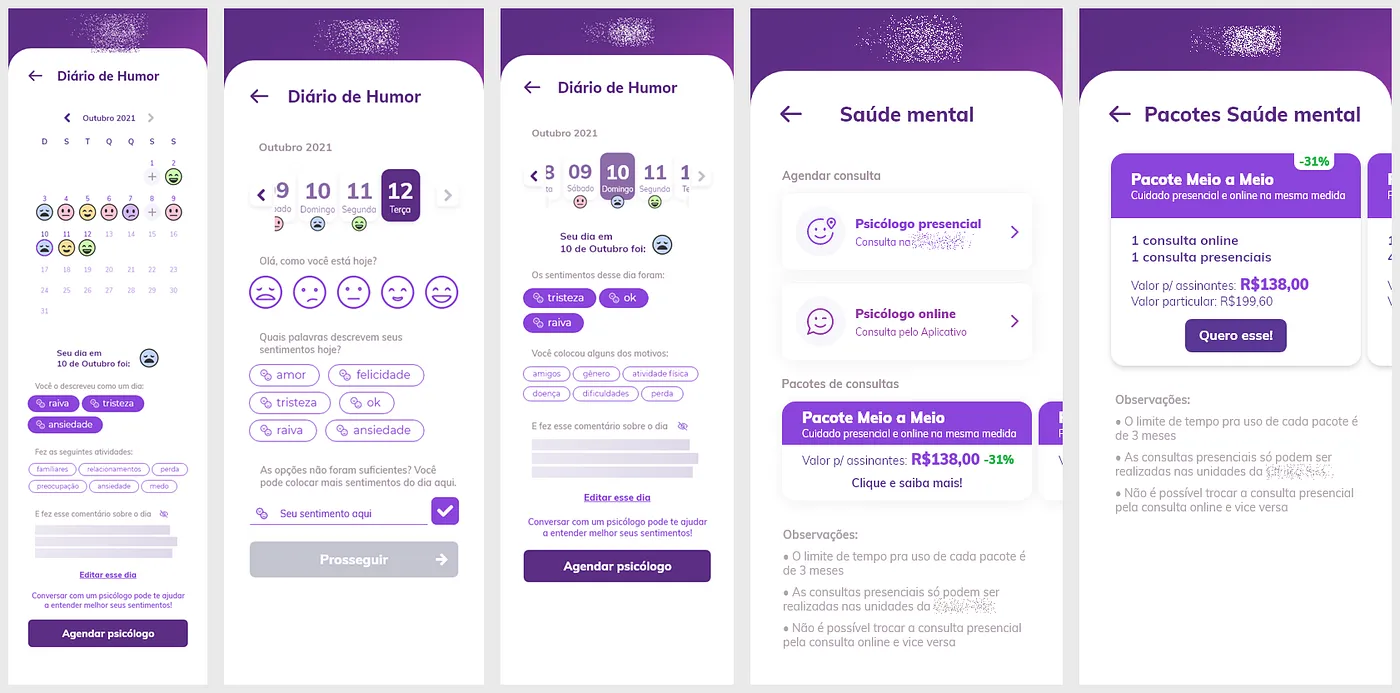
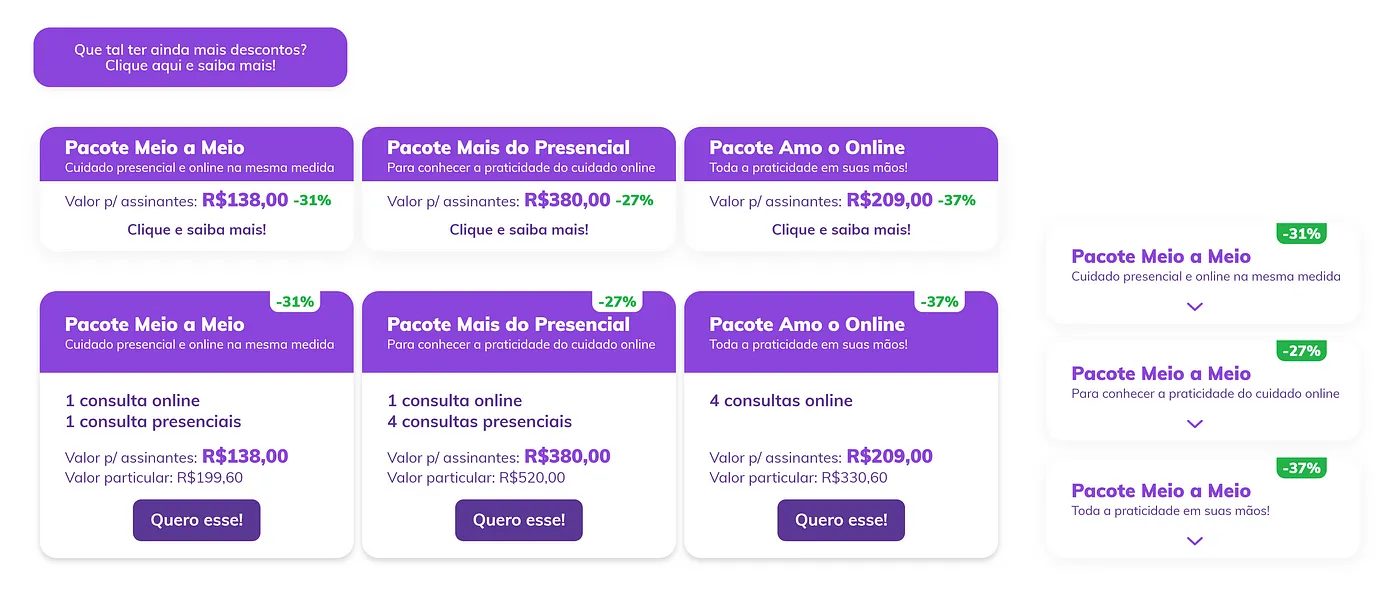
In mental health, we would have 3 major tasks: scheduling in-person and online consultations (I received this part 'ready'), making a mood diary for tracking, and providing discount packages for consultations (it seems small, but involves thinking about copywriting, UX writing, and UI).
Benchmark, desired features, and requirements board.
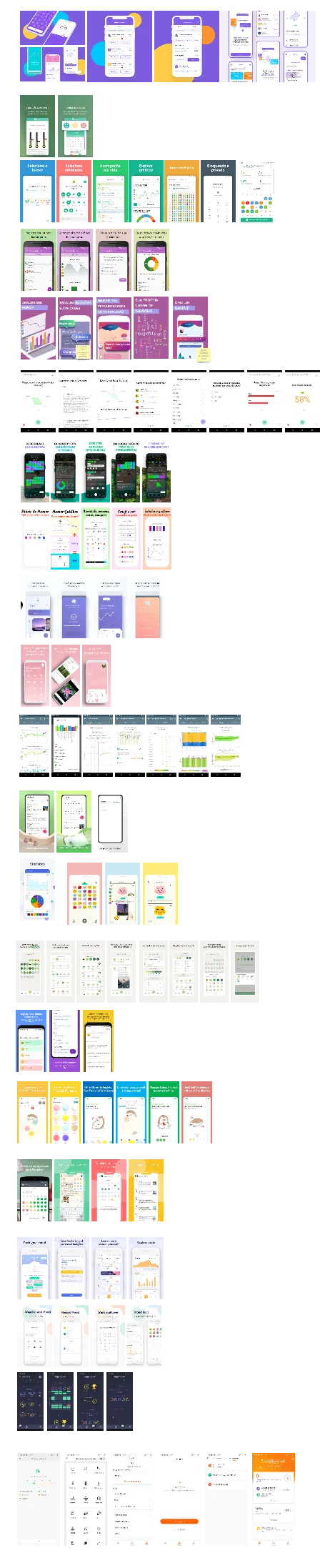
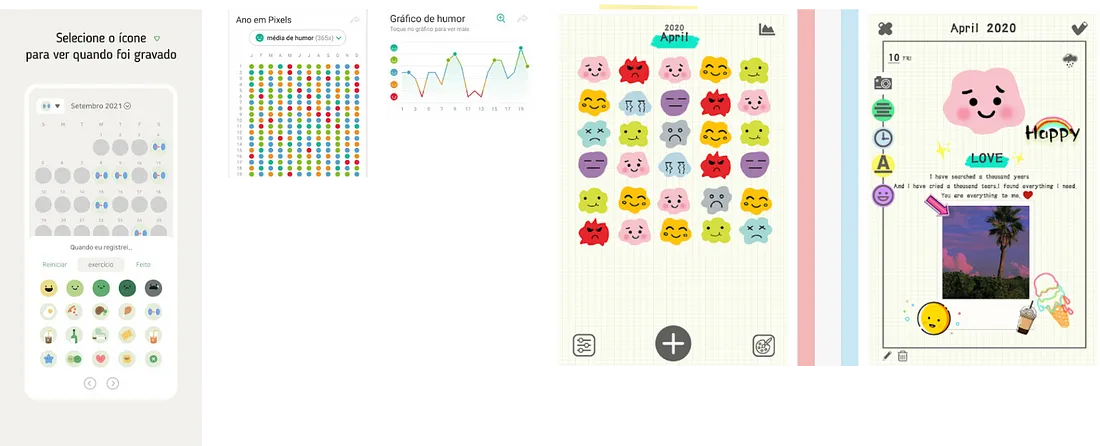
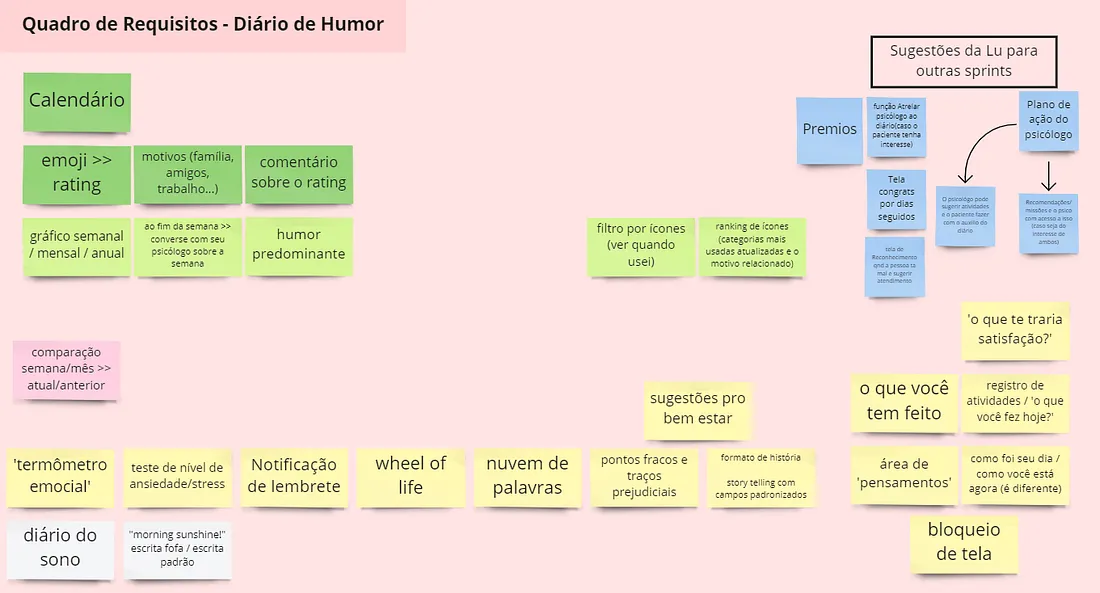
I started with a very extensive benchmark to see what was happening in the world of mood diary apps. I selected some features that I found very interesting and differentiated — even if they might not be applicable to our case. Then, I made a requirements board. From then on, I had the help of two interns: Luciana and Isabela.
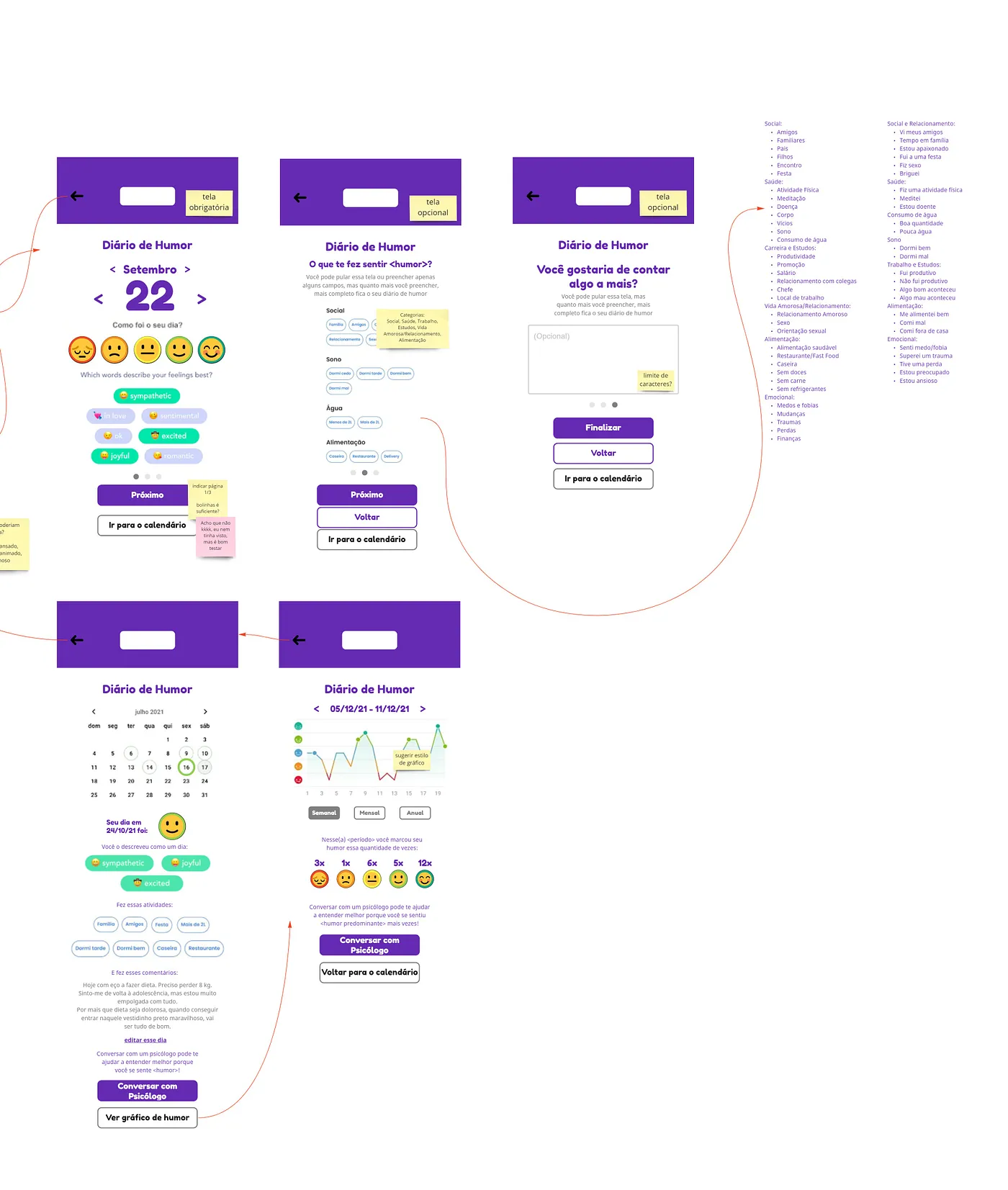
Once the requirements were gathered, I started working on a simple low-fidelity but visual prototype to validate the flow. The team approved it, and I started making the screens.
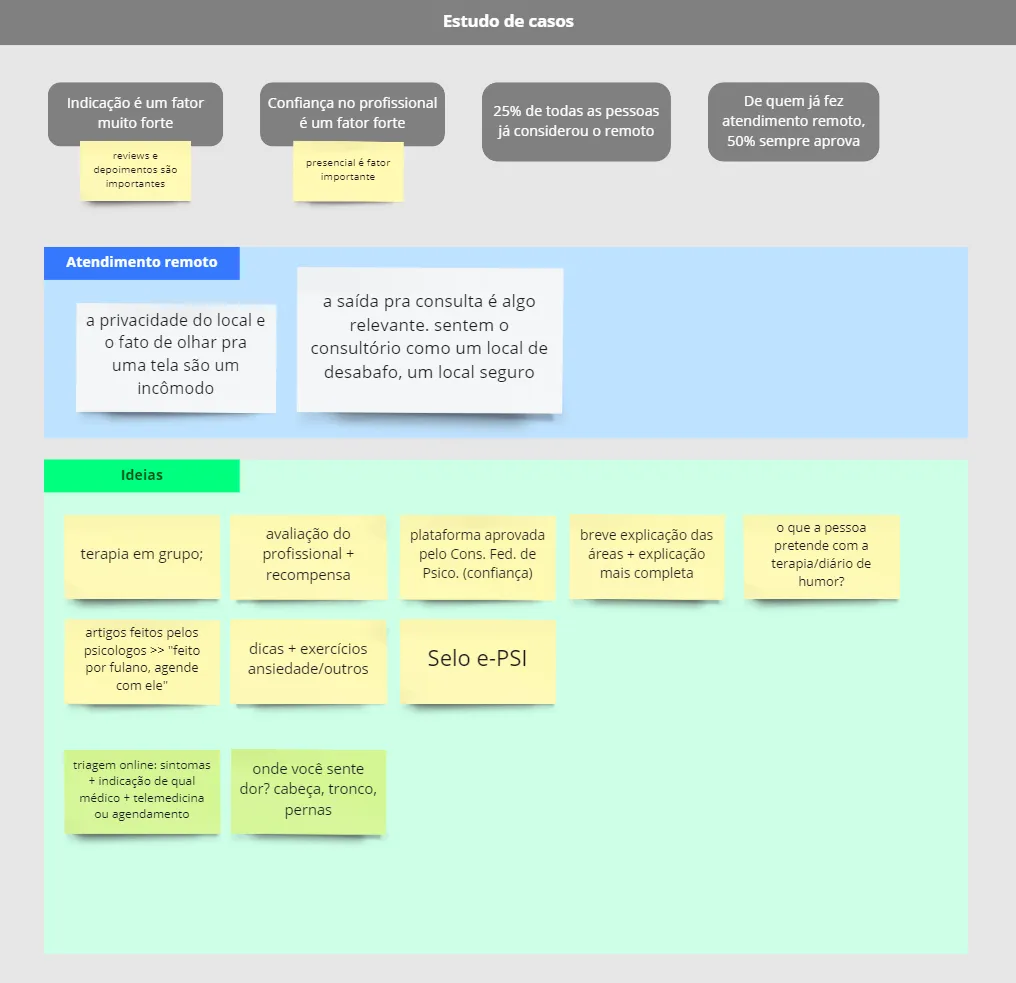
I also conducted case studies to get more information about what users think about mental health. The conclusion I reached is that this is risky ground; people are still getting used to everything being online, many miss in-person, and in some cases, there are very valid justifications for face-to-face consultations.
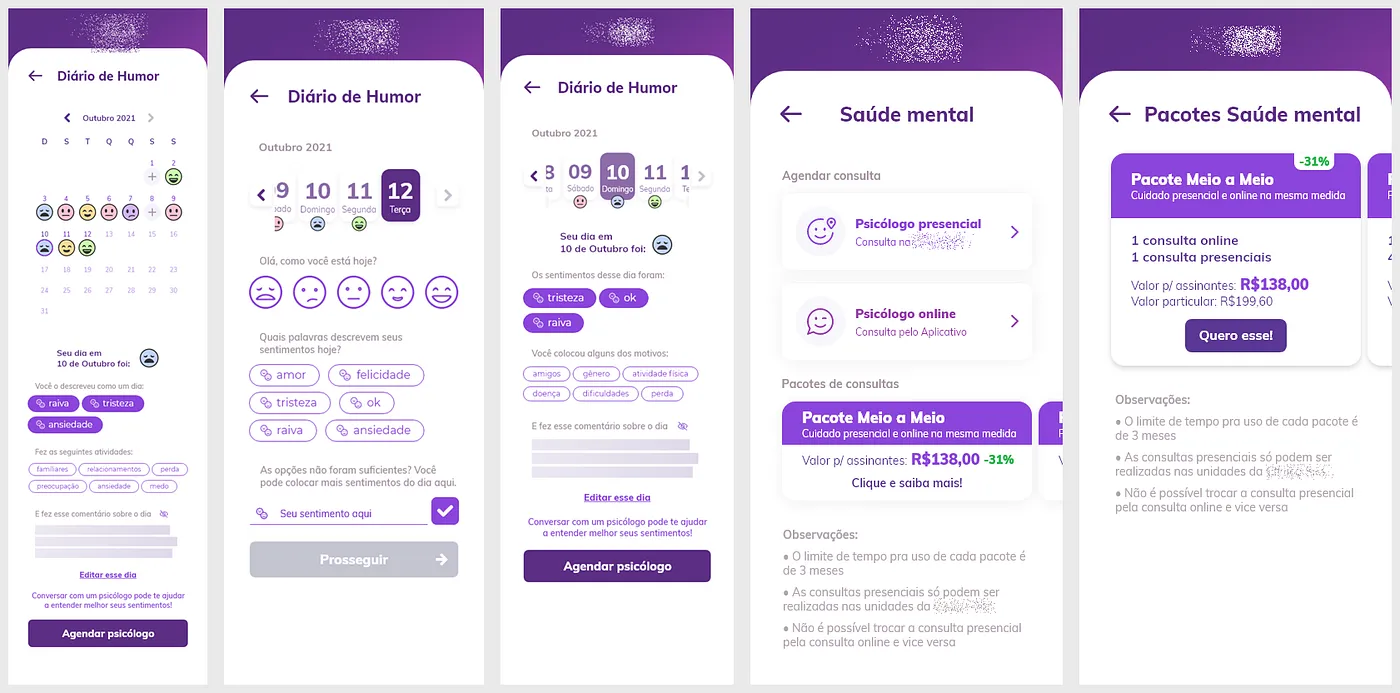
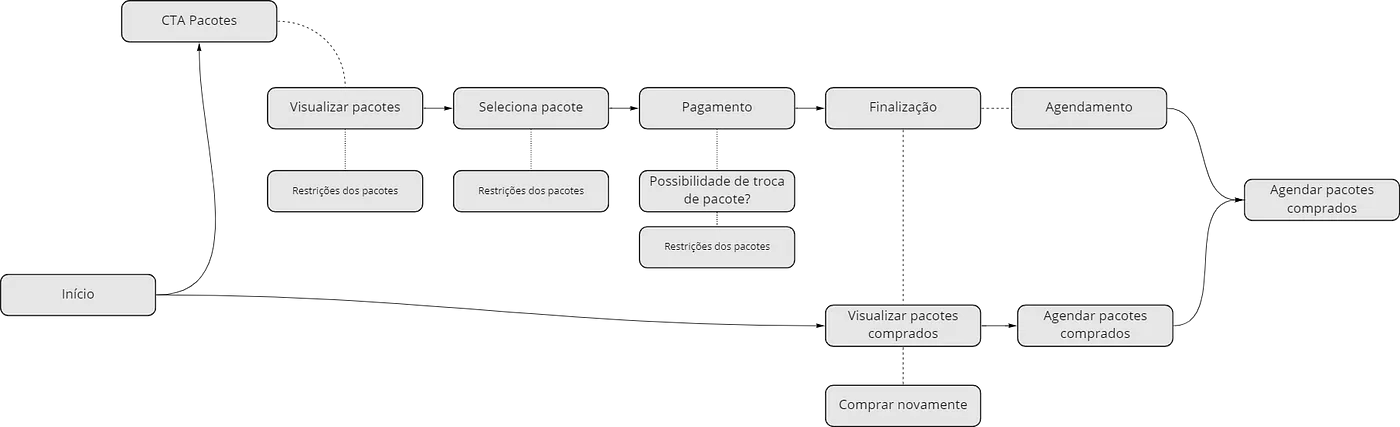
For the consultation packages, I designed a flow to know where they fit best and what fits best.
I also generated call-to-action cards for the packages, cards for smaller packages, and larger cards with all information. I needed to use copy here because the idea is for the text to capture curiosity about the packages without disrupting the normal flow.
My work in this squad ended here, but before closing, I'll comment on other things done in parallel. We did an inception to discover what our next product would be after mental health.
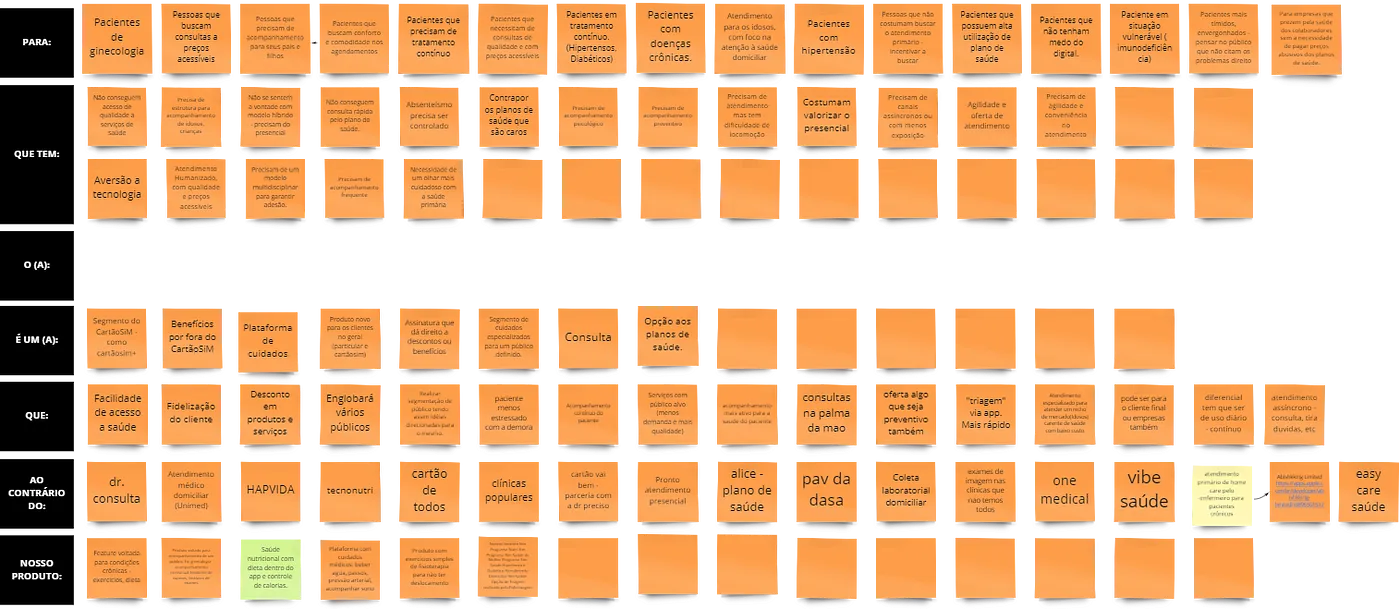
I even started researching and doing a new benchmark, but the work ended. But who knows, maybe it continues in another opportunity...
Gallery